
DAVID Bean’s Local Postal History Project
(Archive ref: DDX2498 . Now available on the Digital Archive)
The postal service, for many of us, is something that runs in the background of our minds, yet it holds a rich history. For centuries, the Post Office, and postal workers have been integral to life in Great Britain. This vital institution employed hundreds of thousands of people, whose contributions often go unrecognized. One East Riding resident, David Bean, a retired postal worker, has embarked on a project to preserve the past of Hull and East Riding’s postal workers.
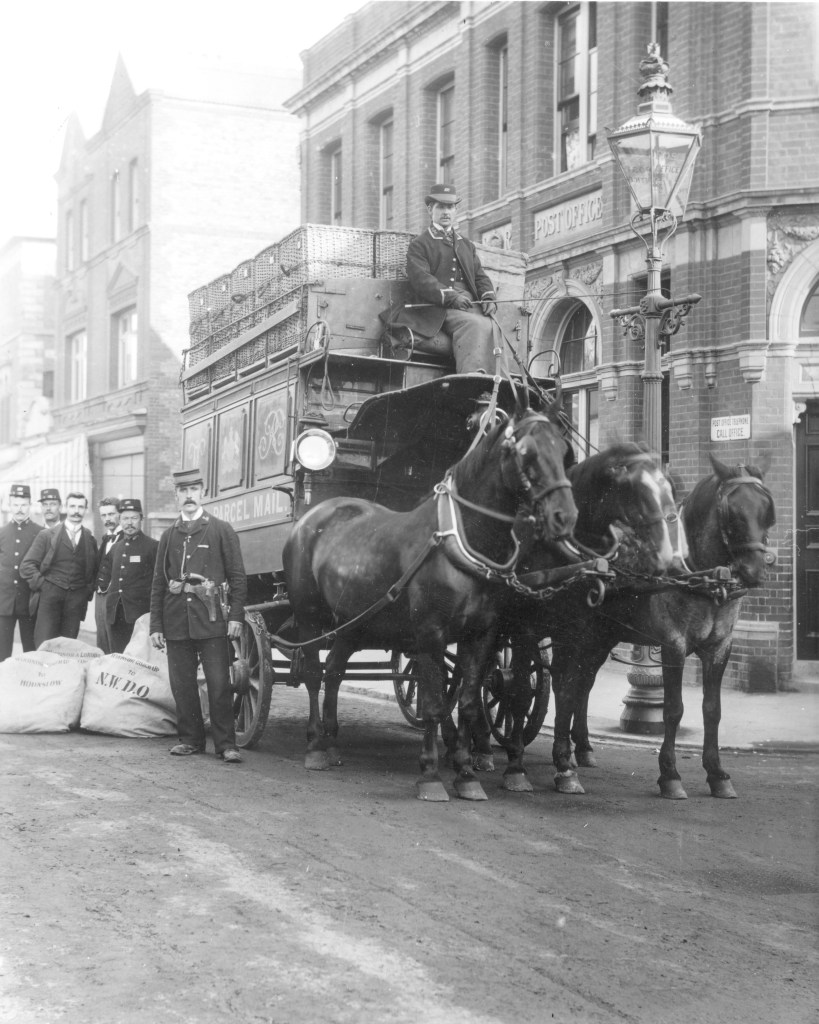
“I began this project because I was fortunate to work with many of the older established workers, ‘the old school’ who, metaphorically speaking, ‘knew the rules backwards’. I learned a lot, realising there was a long and interesting history waiting to be discovered.” (David Bean).
David Bean worked as a postal worker at Hull’s Malmo Road depot for 18 years, before accepting redundancy at the age of 62. He was employed by Royal Mail from 1996, on a part-time basis, which was common for new entrants at the time. After about three and a half years of service he was taken on ‘full-time’ when a position became available.
“My role or duty as a ‘leave reserve’ driver (Basically meant I replaced drivers who were ‘on sick leave’ or ‘annual leave’). The post took me, over many years, across the entire, Hull and East Riding network gifting to me an invaluable knowledge of the people and region from, for example, ‘Staddlethorpe Station to Spurn Point.’ Seemed a shame to allow my deep knowledge and interesting experiences to simply fade away.” (David Bean).
Despite the ubiquitous nature of the postal system, this didn’t mean that its documented history was safe and secure, as David explains:
“Everyone knew a ‘postie’ this also meant that Hundreds of thousands of boys, men and women joined this vital institution. Our local industrial past has for too long been ignored, often, records destroyed as yet another long-established firm ‘went under.’” (David Bean).
When a company ceases operation, it is not uncommon for its records to vanish with it. Fortunately, Royal Mail has preserved its ledgers and pension records, providing a treasure trove of information for historians, like David. He elaborates:
“Royal Mail, founded by Henry VIII, and a government department up to 1969, has kept and presented to the nation its ledgers and Pension records via Ancestry UK. I extracted, like a dentist pulls teeth, our portion of the records for Hull and East Riding.” (David Bean).
David’s project is built on two main elements: ‘Appointments’ from 1737 to 1969 and ‘Pension Records’ from 1870 to 1969. Extracting these records was no easy task. The appointments records in particular presented a significant challenge. David recounts:
“Extracting appointments records, was never at any time easy. Page after page of hand-written national entries were ‘scribbled, and squeezed’ into almost any available space, often encroaching on other entries. The writing varied from ‘just acceptable’ to ‘almost indecipherable’, but the biggest challenge was to find ways to pick out our entries.” (David Bean).
Using several search variations on a ‘trial and error’ basis, he embarked on a learning curve. According to David, to keep it straightforward, the key insight is that providing less information often leads to more successful results.
“Using the main postal centres as guides, Hull, Brough, Hedon, Patrington, Beverley, Bridlington and Driffield, and many others, the correct entries were gradually revealed. As I used lots of variations, Bridlington becomes ‘Brid’ or ‘Brid ’ton’, Beverley becomes ‘Bev’ as simple examples to input my searches. Extra entries turned up as well as those I had already found. That was excellent for I had before me a way of checking my work, I returned ‘tireless and dogged’ with another variation and another until I was completely satisfied there were no more to be found.” (David Bean).

Also the administrator of the Facebook page entitled “Hull & East Riding Postal”, David Bean has found great success in sharing the postal stories and imagery he uncovers during his research. Through this platform, he brings to light fascinating insights and visuals that enrich the community’s understanding of the region’s postal history. Sharing images and insights, and pointing out that postal history is still all around us, such as this example:
“Built 1875-1877 the ‘Post & Telegraph Office’ (displayed just below the cornice) were the first premises in the town that were actually owned and maintained by the Post Office. The new premises superseded the offices in Whitefriargate, and subsequently became redundant upon the opening of a new Head Post Office at the corner of Lowgate and Alfred Gelder Street in 1909.” (David Bean).
At the time, the building was at the cutting-edge of innovation:
“It was built as a result of the 1870 Telegraph Act in which the myriad of companies operating in Great Britain were nationalised and bought out by the GPO. It also highlights new and exciting technology, the first Hull building to incorporate the incessant ‘tapping’ of the Morse telegraph machines for the rising Telegraphy and, later on, Telephony industries grouped under what eventually became known as ‘Telecommunications’. Alongside this was added an expansive network of telegraph poles, offices and telegraph messengers, nationwide. This was real progress, generating serious profits and would, over time, as an industry in its’ own right, compete with the ‘letter’ post.” (David Bean).
David’s expertise extends beyond just buildings; he also delves into the other intriguing facets of postal history. One such aspect he highlights is the ‘TPO’ or ‘Travelling Post Office,’ which operated from York Railway Station, serving the surrounding areas. Below, you can see an example of the insides of one of these historic carriages.
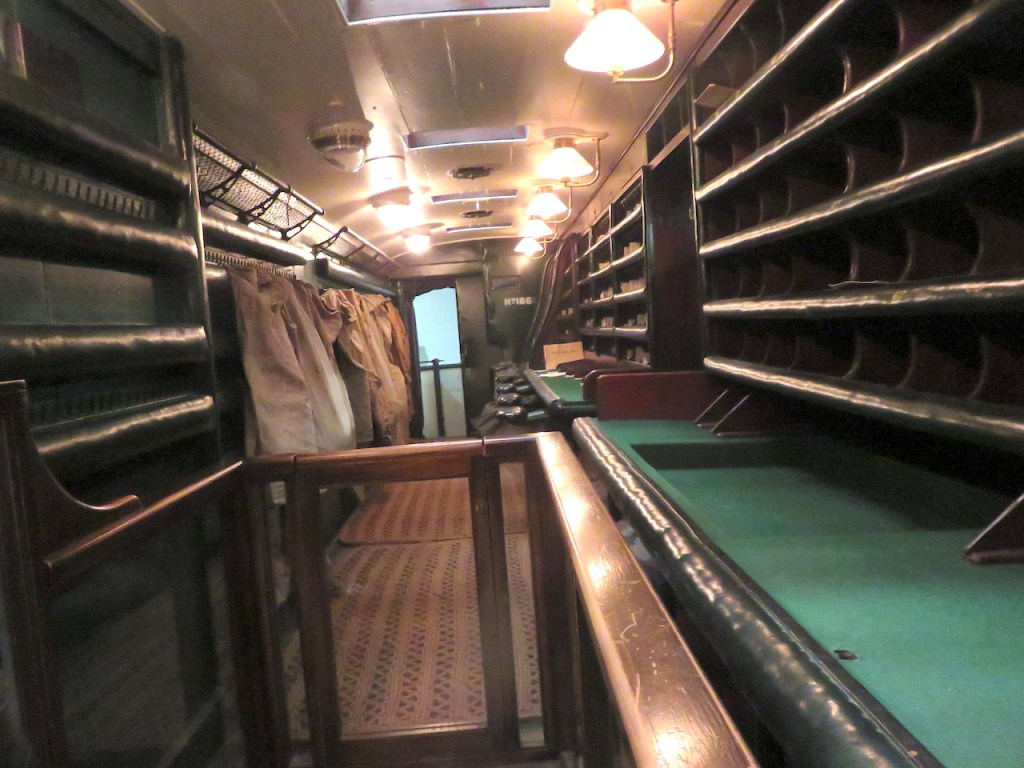
“This was another new concept sorting mail on board trains as they travelled up and down the country. Begun very early in 1838 from the Midlands and it was a big success story. The death knell for TPOs was sounded in 2004 to alleviate a problem of ageing ‘rolling stock’, health and safety issues (when men could be thrown from one side of the carriage to the other) and a system that was becoming largely outmoded due to better transport links and aircraft. It was in operation for nearly 160 years and whilst mail is still carried on the trains, the TPOs are now a thing of the past.” (David Bean).
David Bean’s dedication to preserving the history of Hull and East Riding’s postal workers offers a unique glimpse into a vital part of the region’s industrial past. His work ensures that the stories and contributions of these individuals are not forgotten, providing a valuable resource for historians and local residents alike. For those researching their family history, these records can be especially valuable, potentially creating deeper connections and understanding towards ancestors who worked within the postal service.
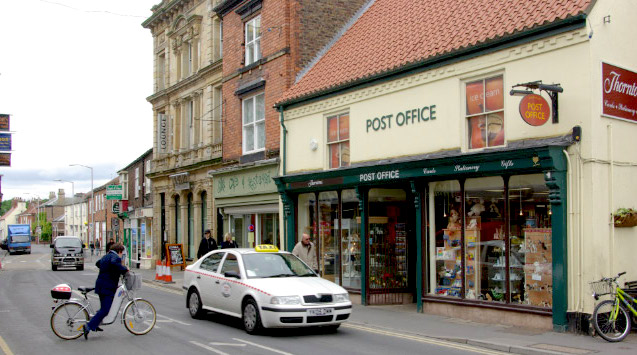
David Bean’s project research is now available to view on East Riding Archives’ Digital Archive. You can access the material here: David Bean ‘Hull and East Yorkshire GPO Postal History Project .
(Read more: David Bean’s postal research findings from ‘The York Herald, 17th September 1875’)

 Archives blog
Very Interesting. More articles like this, please
LikeLiked by 1 person